Top Modern Chemical Insecticides Revolutionizing Indian Agriculture
Indian farming keeps changing. Practices and tools keep improving. Some farms now use precision methods and better irrigation. Farmers also try more effective ways to feed crops. Digital help and advice are becoming more common. In all of this, modern insecticides still matter. They help stop insect damage. This can affect both harvest quantity and produce quality.

Farmers today can choose from many insecticide options. Some work through the plant. Others act on the surface. Some last longer in the field. There are also options made for specific pests. The main point is not to buy the strongest option. It is to match the product to the crop and the pest. You also need the right time in the crop cycle. The spray method matters too. You should follow the label directions for use. If you want steady crop protection, a known Insecticide Company can help. Such a company can offer products for pest control needs.
The New Era of Insect Control: More Targeted, Less Guesswork
Previously, pest control was predominantly the use of broad-spectrum formulations. Now, however, with a greater understanding of pest biology and pest behaviour, and a focus on pest susceptibility, insecticide application has become increasingly more targeted.
Why is this a good thing, you may ask? Because Indian farmers have to control several types of pests such as whiteflies, aphids, jassids, thrips, borers, stem borers, leaf folders, termites, and mites on all kinds of crops cotton and paddy for grain, vegetables, fruits and plantation crops too.
In a word, modern insecticides are designed such that they:
Target insect-specific nerve and biological functions.
Through Systemic and translaminar activity, plant tissues, which are hardly accessible via conventional surface spraying, get a shield of protection.
Depending on the active ingredient and the formulation, quick knockdown and longer periods of protection are offered.
Multiple forms of the product, like soluble granules, suspension concentrates, and emulsifiable concentrates, are present.
When insecticides with diverse mechanisms of action are rotated correctly, it will help manage resistance.
So in effect, with all these advances, farmers are not just putting chemicals in quantities but making strategic decisions while protecting crops.
Modern Insecticide Solutions Worth Knowing
A top-quality modern insecticide product line would tackle different types of pests instead of putting all your bets on one type of chemistry. Following is a list of ten products from Dhanuka Agritech's insecticide range that show this variety.
1. Miyako
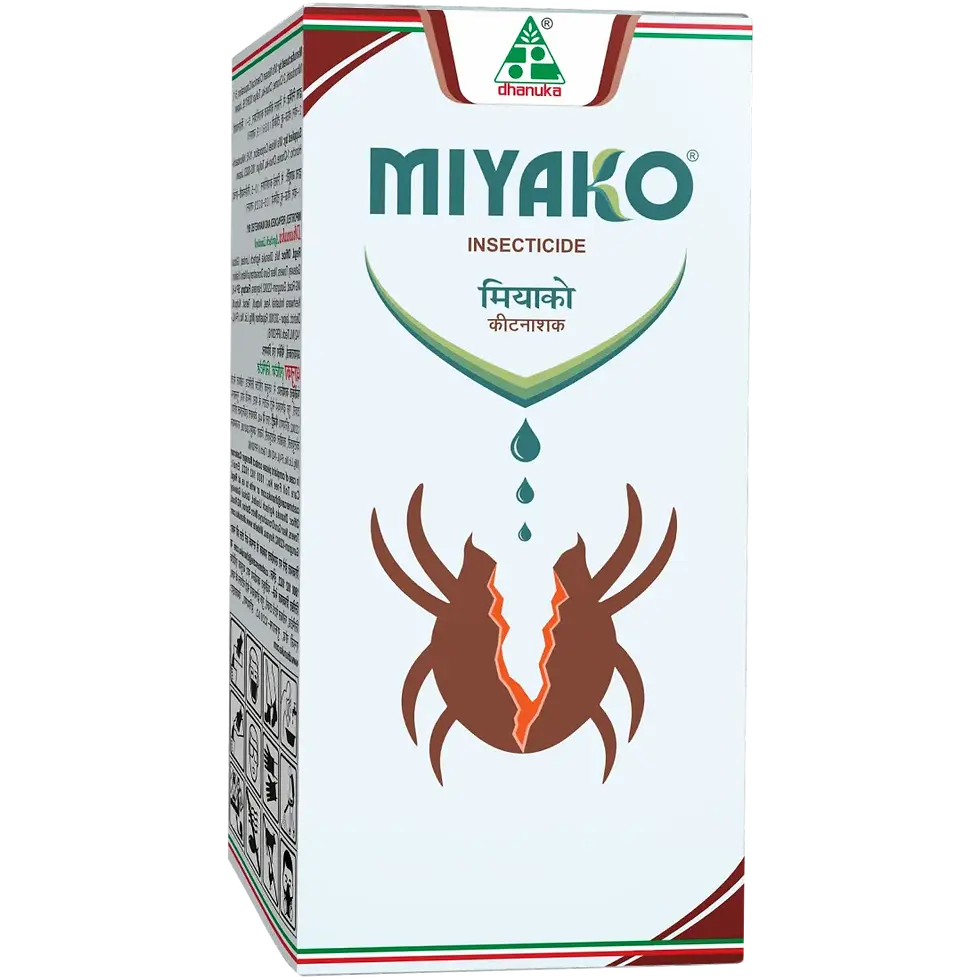
Miyako is one of the insecticides that are currently marketed by Dhanuka Agritech and thus highlights its insecticide portfolio. With the introduction of new formulations and technologies to the Indian agri-input market, the farmers have now a wide choice of solutions for various pest protection and crop requirements. Before using the product, it always pays to cross-verify information from the product labels, such as registered crops, target pests, dosage, and application instructions.
2. Lanevo

Lanevo is a ready-to-use insecticide with Fluxametamide 5.81% + Bifenthrin 5.81% EC as the active ingredients. Dhanuka refers to the fact that it has dual modes of action along with the ability to control both types of pests, i.e., insects that pierce the plants and then sip them and insects that chew leaves and stems. It should be considered crop-wise; for example, chilli and brinjal are listed crops.
3. Ripple

Ripple, an insecticide with three modes of action, contact killing, and stomach poisoning, as well as going into leaves to kill insects, is made as Thiamethoxam 75% SG. Dhanuka lists various crop applications from groundnut to sugar cane and even paddy depending on what insect you want to kill.
4. Foster
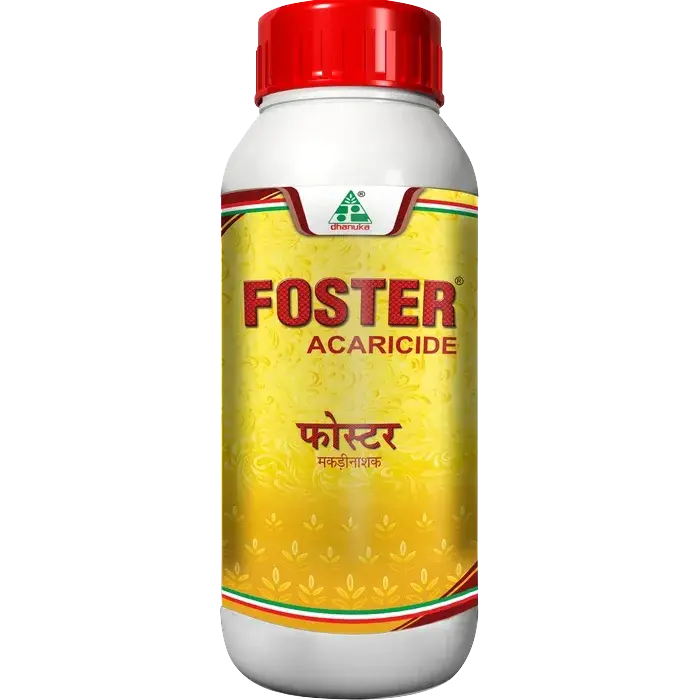
Foster, a benzoyl acetonitrile-type insecticide, is presented to deal with the management of red mites by its role as a miticide. According to Dhanuka, this substance acts by inhibiting the production of energy of mitochondria in red mites, which in turn kills all stages of the pest.
5. Jackal

Jackal, Lambda-cyhalothrin 4.9% CS, is a type of synthetic pyrethroid with a contact and stomach mode of action. Pest control, including of cotton, paddy, eggplant, okra, tomato, grapes, and chili, is listed amongst uses of this product.
6. Media
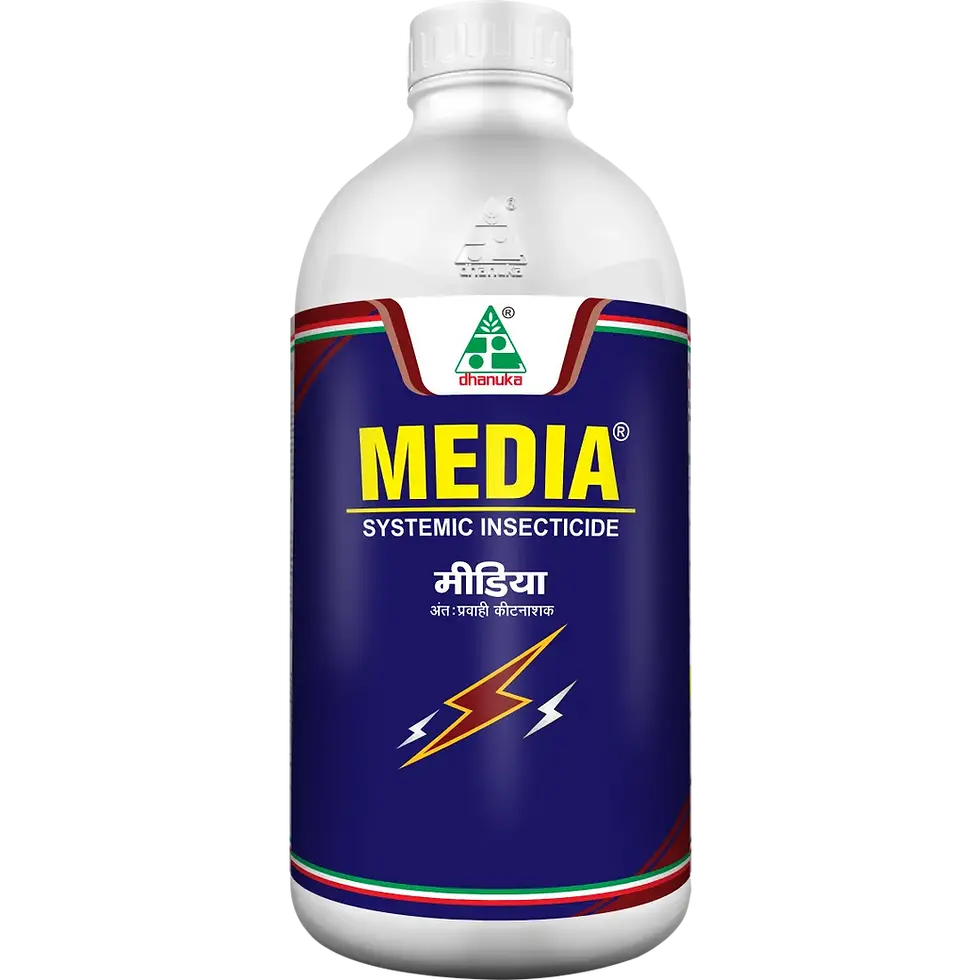
Media is basically a systemic insecticide containing the active ingredient Imidacloprid 17.8% SL targeted at a wide array of sucking insects as well as termites.
Along the line, some of the agricultural commodities recommended by Dhanuka for treatment to which Media can be applied are cotton, sugarcane, chili, okra, mango, tomato, brinjal and others.
7. Dhanpreet
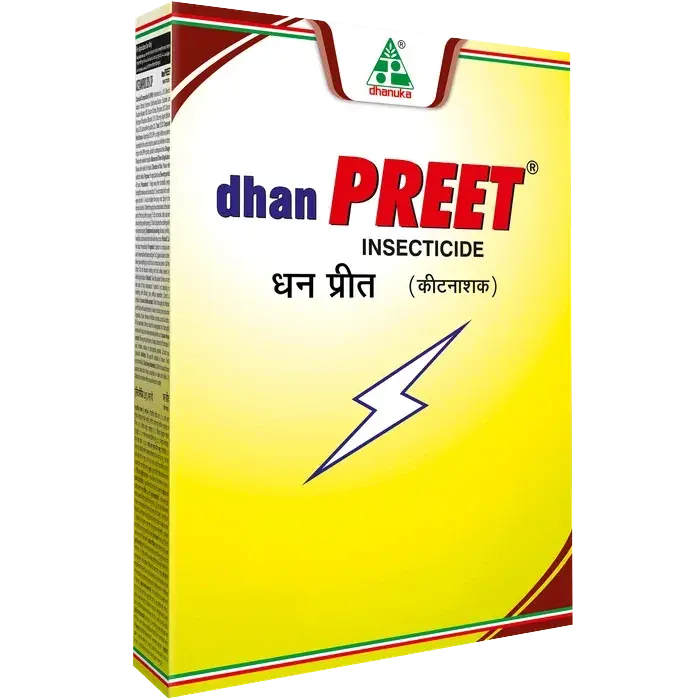
Dhanpreet is formulated as an insecticide containing Acetamiprid 20% SP for a variety of sucking pests, viz., aphids, jassids, whiteflies, etc.
The fact that it is highly systemic and has translaminar properties means that modern insecticides like this one can effectively work even against pests that reside within the plant tissues.
8. Areva

One of the ingredients of Areva is Thiametoxam at the concentration level of 25% WG.
Dhanuka has described the product as a very effective one that is used on plants through foliar spray, drenching and drip irrigation and is dependent on the type of crop and registered use for its application, which is quite convenient for farmers.
9. Apply

Pymetrozine 50% WG is the formulation of Apply. The main role of Apply, apart from being a pesticide, is the control of brown planthopper or BPH, on paddy. This is because its mechanism of action interferes with the pest's chewing and feeding activities, resulting in no new feeding and therefore limiting damage caused to the plant.
10. Mortar
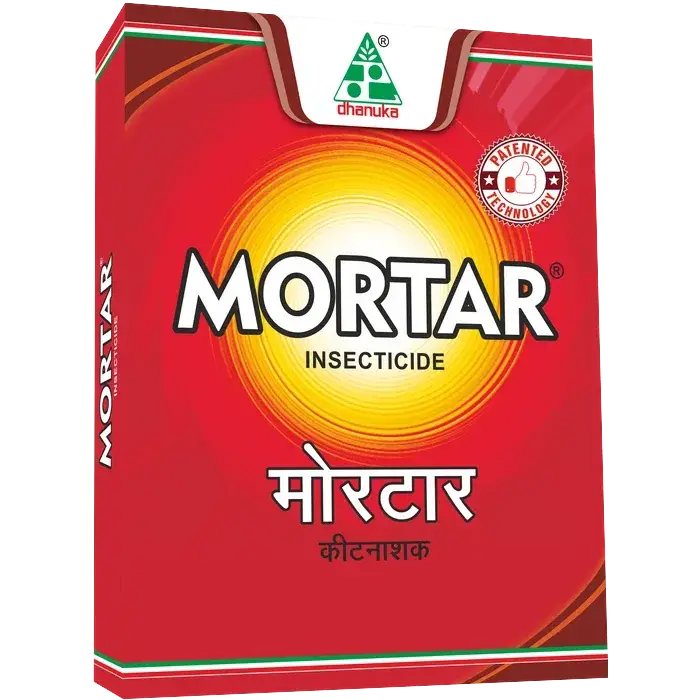
Curtar Hydrochloride, a component of Mortar, at 75% SG, has been included and this formulation is developed with regard to rice insect pest problems related to stem borer and leaf-folder in rice.
Dhanuka highlights the fact that its mode of application is systemic, contact and translaminar, and the effectiveness of the product against various stages of insects, that is, egg-laying adults, larvae and nymphs.
Conclusion
Indian farms are seeing newer chemical insecticides. This gives growers more options to deal with insects that damage crops. Brands like Miyako, Lanevo, Ripple, Foster, Jackal, Media, Dhanpreet, Areva, Apply, and Mortar show that today’s products come in different forms and are used for different pest problems.
Dhanuka Agritech lists many of these products in its current line. It also includes other insecticide solutions. The company aims to provide crop protection choices for different kinds of farming needs.
What matters most for farmers and other field workers is not only the fact that insecticides keep improving. The key change is to match the product to the pest. It also matters to use it at the right time and apply it in the right manner.
Comments